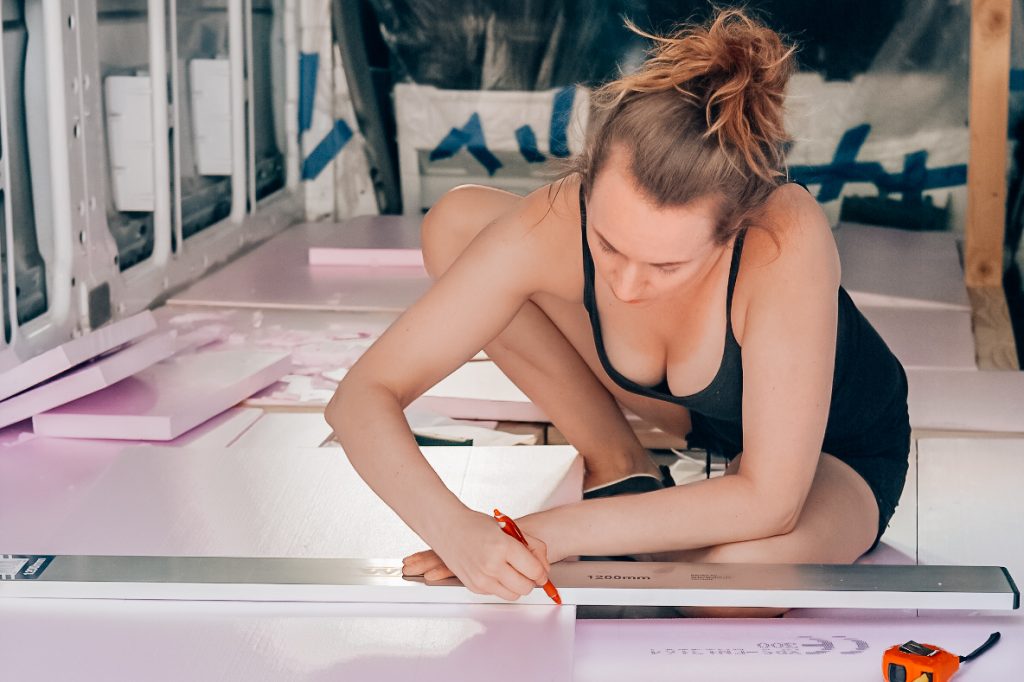
One of the first things you’ll do when converting a van (or bus) into a home is most likely insulating it. Before we started our conversion we had no idea about things like insulation and spent countless of hours learning and comparing the different options.
What we chose and why
We have XPS-boards, Armaflex, rock wool and spray foam in our van.
We knew from the beginning that insulation was one of the most important things to get right the first time since that’s one of the hardest things to redo when we’re done. Another thing we knew was that we want to be able to live comfortably in the van all year. Because we come from Sweden and want to be able to be here during the cold winters it’s super important that we can keep the heat in (and the cold out).
Another thing that was important was that the materials we choose can handle the condensation that builds up in vans well and that it won’t start to mold.
So, with that in mind, we started to search for the best insulation for us. It didn’t take long before we realised that we’re going to use different insulation for different parts of the van.
This is what we ended up with:

Floor, walls and ceiling
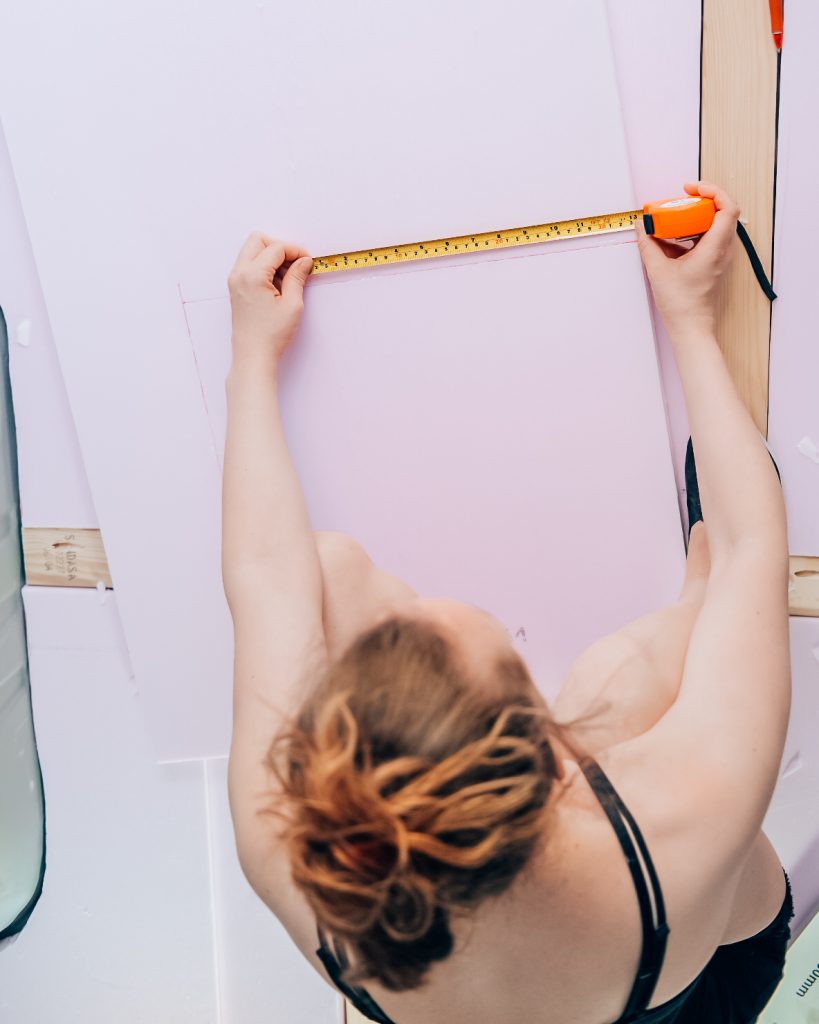
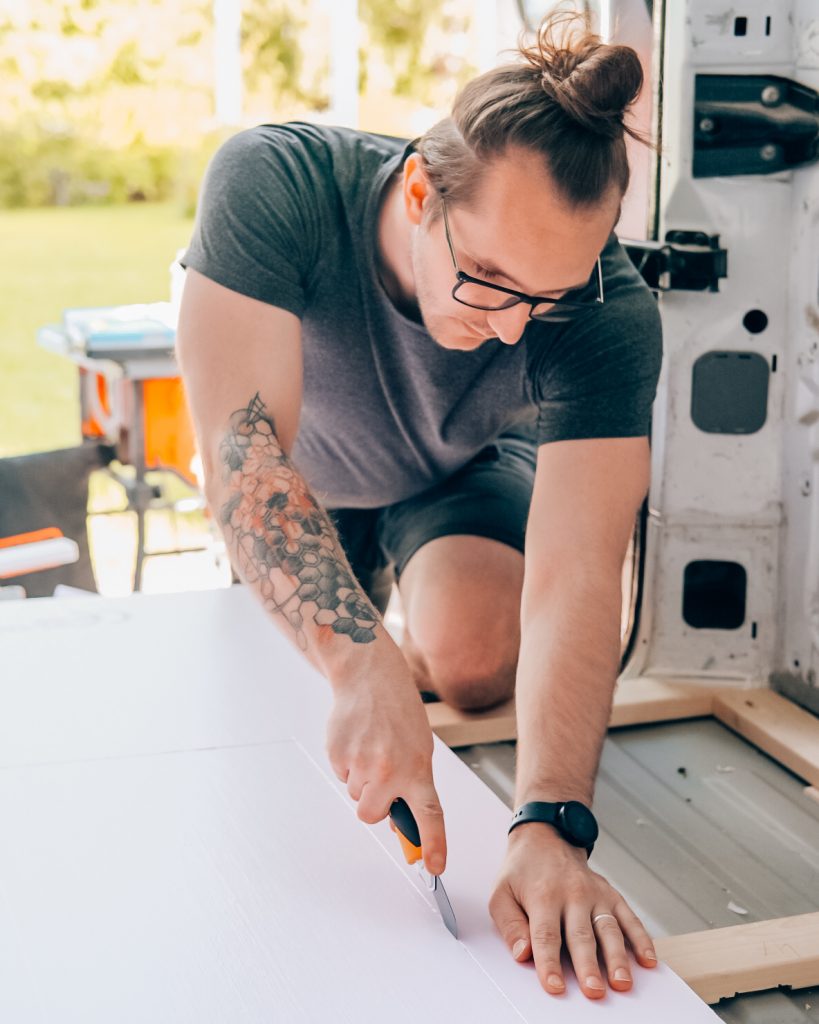
Here we wanted something that really keeps the cold air out, but also something that feels sturdy and gives some extra support for the floor and the walls. We also kept in mind that it’s a plus if it’s at least a little bit sound-insulating. After a lot of consideration, we decided to go with 30mm XPS-boards on the floor and 50mm XPS-boards on the walls and ceiling. We bought our XPS-boards in the Swedish store XL-bygg.
We’ve seen quite a few builds where the floor isn’t insulated at all, and even though it would be nice to have those extra centimeters of height in the van, it was more important to us that we do everything in our power to keep the van warm.
Doors
Because there are a lot of empty pockets to fill in our doors, we decided to use rock wool for insulation. With rock wool, it’s also easy to get in there if we ever need to troubleshoot the electrics inside the doors.
Wheel wells
For the wheel wells, we used Armaflex, for the simple reason that it’s so flexible and easy to apply on the rounded shapes. A lot of noise also seemed to slip through our wheel wells. After applying Armaflex it was a lot quieter driving the van.
Bulkhead
For the bulkhead we used Armaflex. This is one of the parts that we insulated pretty early in the build before we decided that we weren’t going to build a wall between the living area and the seats.
Later in the build, when we decided to have a more open space we added some extra insulation here.
We ended up filling the open space with the rock wool that we had left after insulation the doors.
Windows
One thing that I haven’t read a lot about when studying different van builds is the importance of having a good insulation for your windows. We insulate our windows with a 7 layered insulated window cover. We bought a few meters of it and sewed covers for each window. We’re really happy that we made these covers because a lot of heat gets in through the window in the summer, and a lot of heat gets out through the windows in the winter if we don’t use the covers.

Will we do it differently if we convert another van in the future?
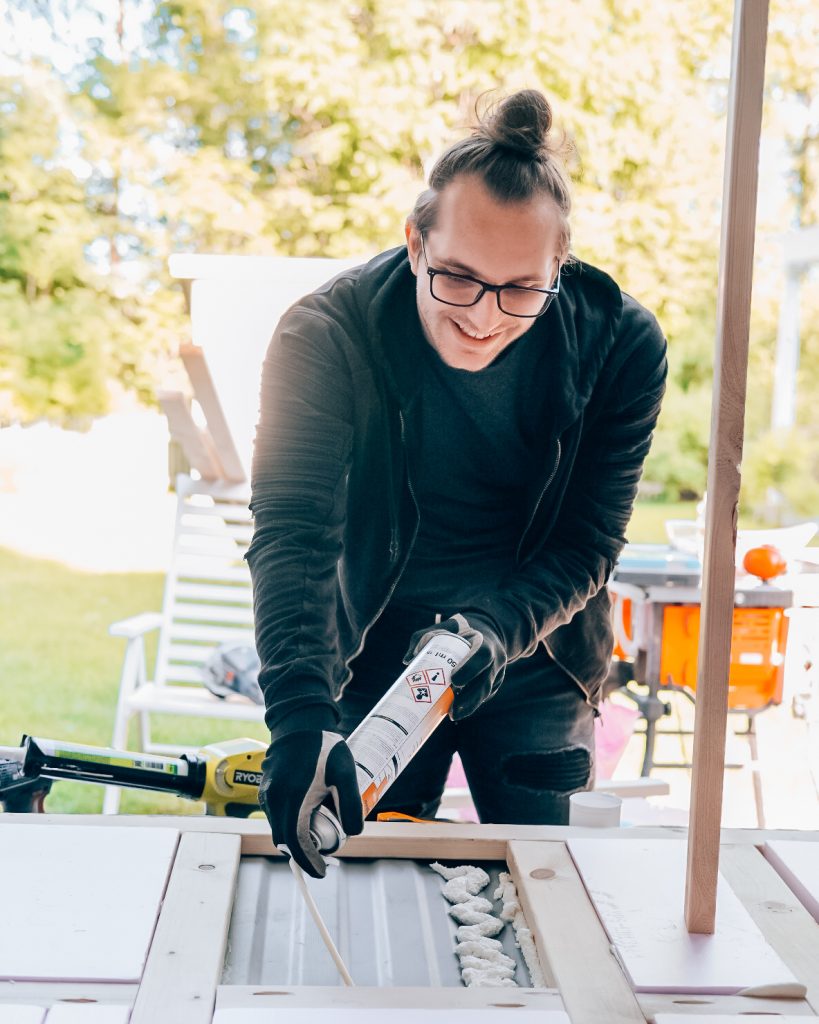
Yes, probably. It’s not that we’re not happy with what we have now, we’re actually super happy with it so far. But… We think that we could have made it easier and a lot less messy if we used rock wool to fill all the small holes instead of using spray foam. It would probably end up a lot cheaper as well, but still be really good insulated.
Do you want to read more about our conversion? Here you’ll find all of our van conversion posts!


